Act One
Campfire Storytelling
Act One of Mr. Burns finds our intrepid survivors sitting around campfire trying to recreate a specific episode from The Simpsons moment by moment. That episode? Cape Feare.
Much like when theatre developed the first time, I believe that Anne Washburn is showing us how theatre is indestructible in the same way that humanity is. It lives in the heart of each human. As our survivors sit around the fire, the desire for storytelling takes over and theatre is reborn from the ashes of annihilation.
Theatre History
Most people believe that theatre began with the Greeks, but theatre was happening long before it was formalized by Aristotle in his seminal text, The Poetics. Theatre is rooted in campfire storytelling by many of the first nations. What started as sharing tales, myths, and legends around a fire and fostered a sense of connection, ended up inspiring dramatic storytelling forms.
Early campfire tales often served to pass down cultural knowledge, history, and social norms. They also provided entertainment and a way to process emotions and experiences.
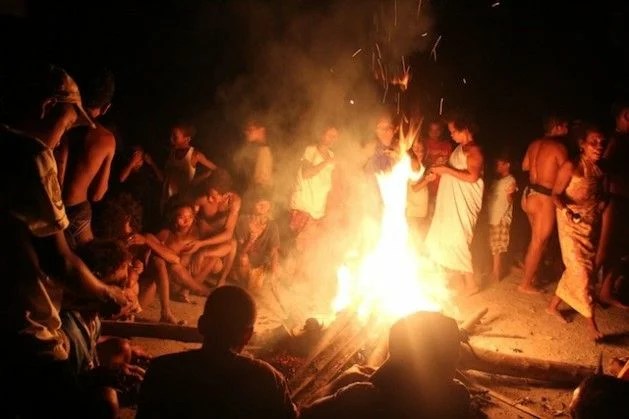
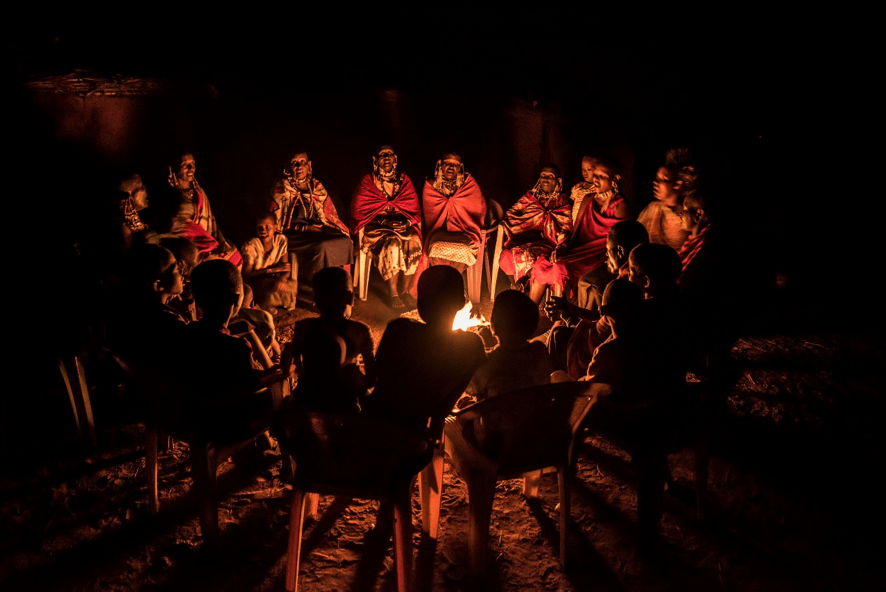
African Storytelling Rituals

First Nations Storytelling and Ritual

Javanese Ritual – Hanuman surrounded by a Ring of Fire
The History of Campfire Storytelling
Act Two
Medieval Theatre Touring
Seven years later, the group as emerged as a fully-fledged theater acting troupe. They are touring in the wagon around the US, presenting different episodes of The Simpsons and working on collecting lines and information to build more episodes. Their idea of teaching about “how things used to be” includes the creation of commercials between scenes and other details that appeal to the nostalgia of what life was before the disaster.
Theatre History
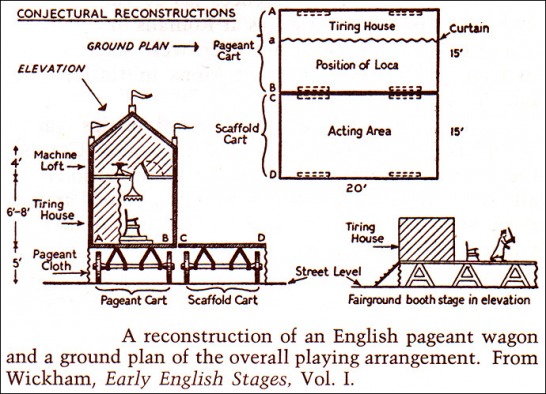
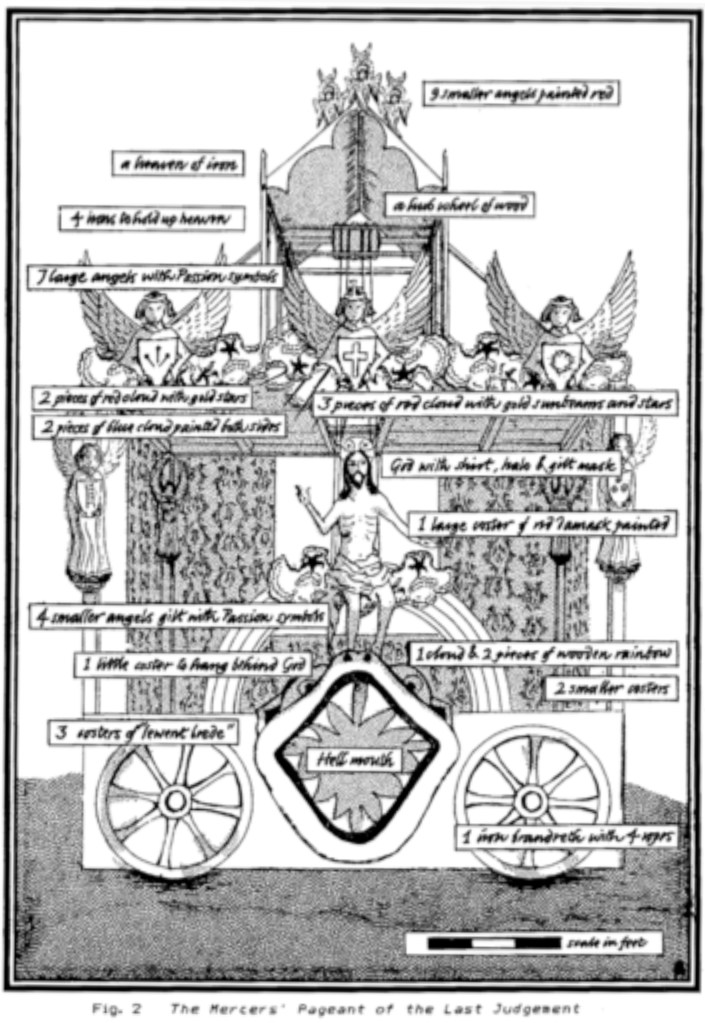
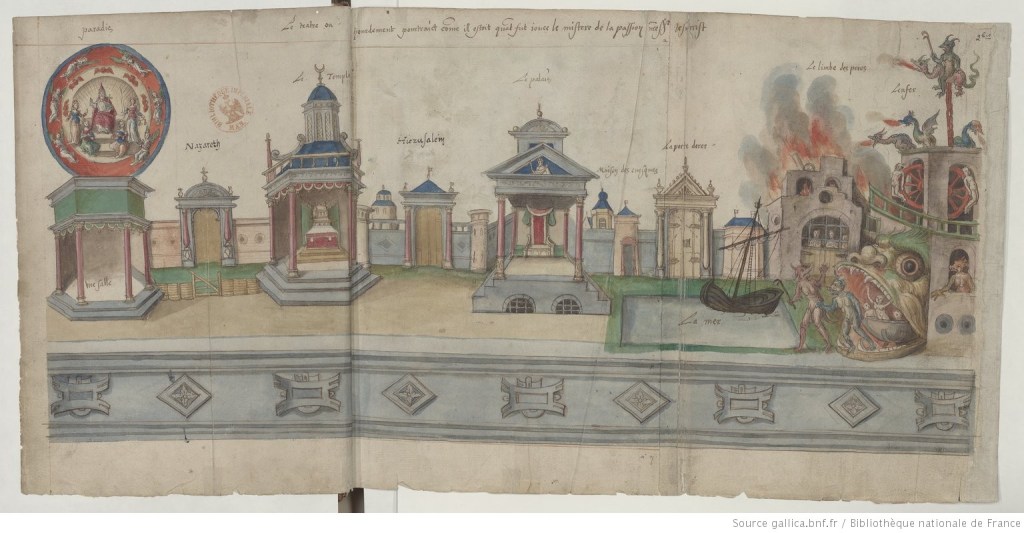
In considering where and how to do the second act, there seemed a strong connection to the Medieval mystery and morality plays. Here, the acting troupes took their carts and moved from town to town to share the Biblical stories. These troupes brought their shows on wagons that acted as the stage and set for each story. There were several wagons set up and audiences moved from one to the other to watch the different stories come to life. To learn more about this type of theatre, watch this video:
Early wagons started rather simply, looking something like this.

As time went on, things became much more intricate.
And as they came together, it almost looked like a small town, one wagon for each Biblical place or story.
In other parts of Europe, this tradition continued through forms such as:
Commedia Dell’Arte in Italy


Wanderbühne in Germany

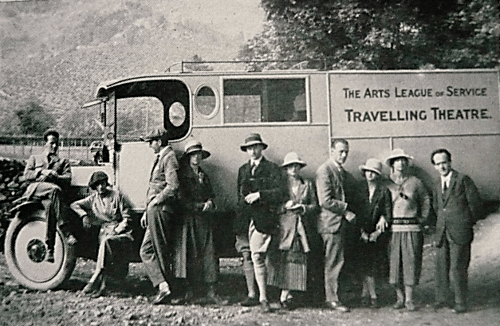
Traveling Theatre Troupes in the U.S.
Act Three
Renaissance Theatre
The troupe has fully formed and been working for 75 years. They have a stage, an audience, and a show that has morphed into something beyond belief. It still has singing, dancing, and The Simpsons, but in a way that no one has ever seen before…
Theatre History
During the Renaissance, theatre moved indoors. This changed everything. Suddenly, you had to consider how to light a production, make the set look realistic, and manage to be heard by your audience that was seated outside of a proscenium.
Lighting
Lighting at the time was either candles or oil lamps which led to several theatre fires. As time moved on, gas became the light source of choice until the invention of the incandescent light bulb.


Candle and Oil Lighting


Gas lamps were introduced in the early 1800’s


Limelight became popular in the 1830’s. It provided the opportunity for a spotlight on the show’s star or for theatrical beams of the sun and moon.


The Kliegel Brothers introduce the first manual stage lighting system using the incandescent light.

Early Strand lighting instruments
Scenery
Sets also changed during this period. Rather than a painted backdrop, sets became much more realistic. They used perspective and realistic items to create the world of the play.
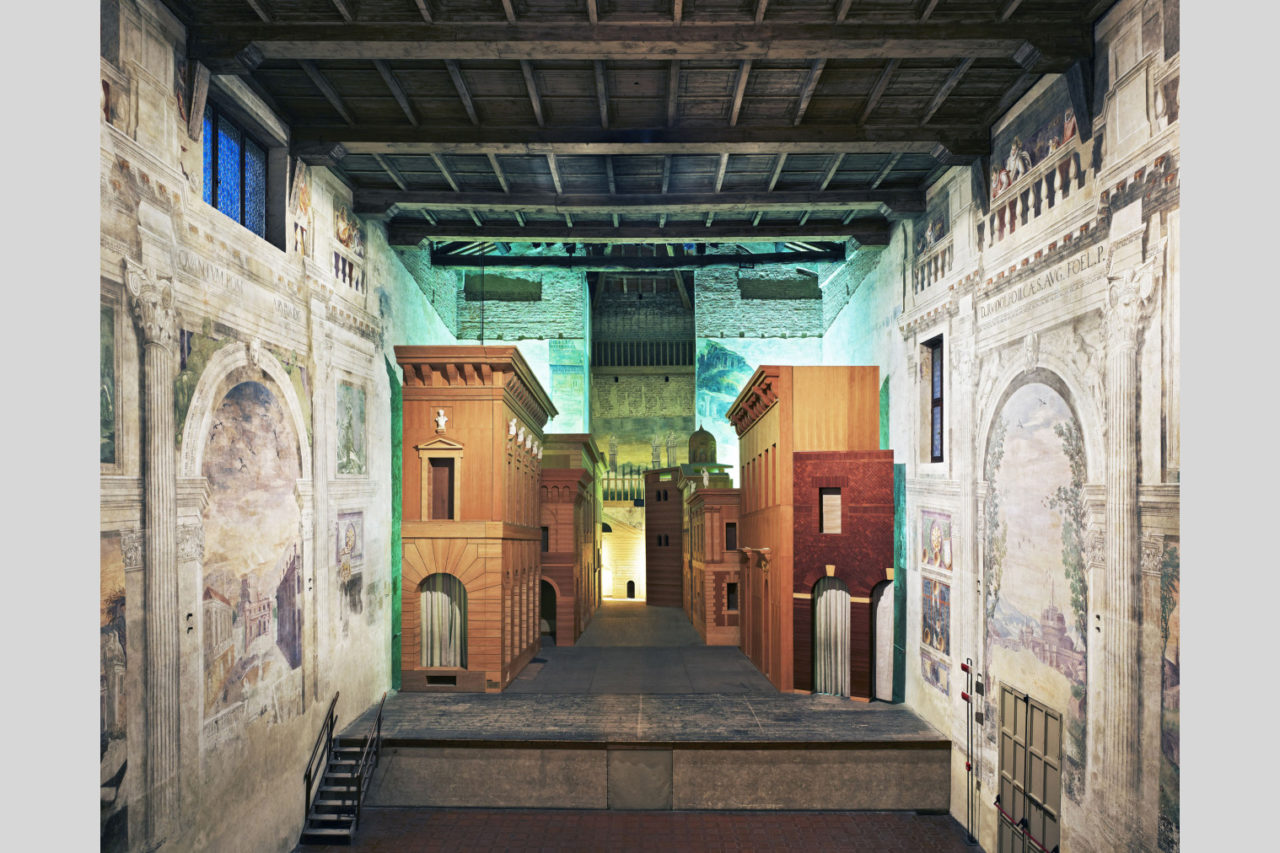

A forced perspective set
Baroque theatre panels
 Mr. Burns at Georgia Tech